AI in wildlife rehabilitation: from paper notes to life-saving insights
Keeping records while managing hands-on animal care is something every wildlife rehabber juggles. But when processing those records takes more hours than your team has, critical insights never make it off the page. Here is how we changed that for seven diamondback terrapin hatchlings, and why it matters for rehabbers everywhere.
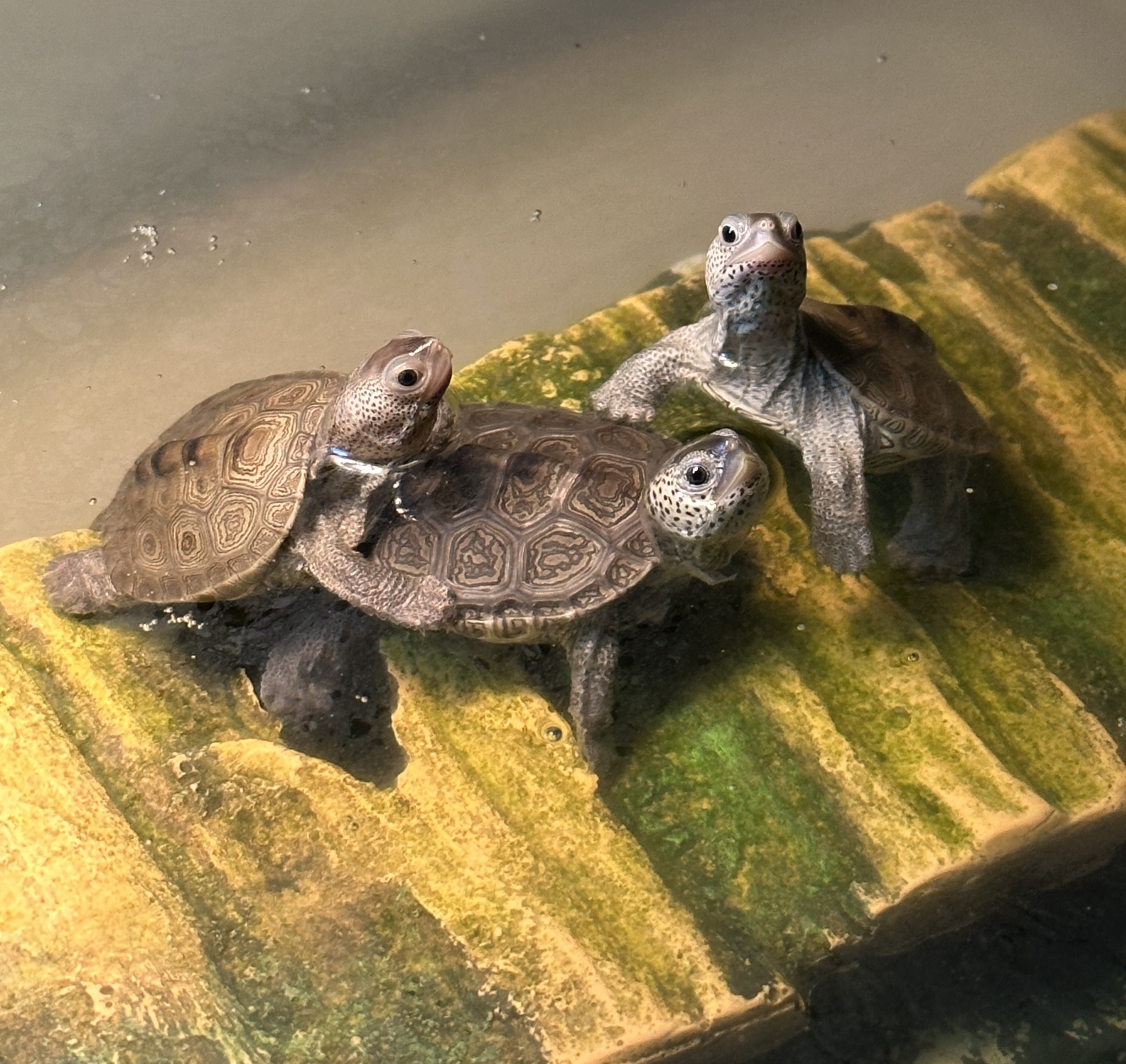
One of the PHP hatchlings, rescued from a local coastal natural area. We keep nesting locations general to protect terrapins from poaching.
A problem every rehabber knows
Keeping records while managing hands-on animal care is a balancing act that every wildlife rehabilitation team knows well. Handwritten notes are often the most practical option in the moment, quick, reliable, and requiring no equipment beyond a pen and paper. The records get kept. And then they sit, because turning those notes into something analyzable means hours of manual data entry, formula building, and cross-checking that nobody has time for alongside everything else.
The result is that good records stay on paper. And insights that should be guiding care decisions remain invisible.
We ran into exactly this problem while caring for seven diamondback terrapin hatchlings, a species of greatest conservation concern in Virginia. And we found a solution that we think could help a lot of other programs too.
The animals behind the data
A few months ago, Jill, one of our volunteer rehabbers, got a call from a construction site near a local coastal natural area. The crew had uncovered a diamondback terrapin nest during excavation. Rather than leave the eggs to chance, they stopped and made the call. Jill went right out to carefully collect them for incubation. (We keep specific nesting locations general because diamondback terrapins are a target for poaching, and pinpointing sites puts them at risk.)
"I'll admit I was doubtful they would be viable, but we wanted to incubate them anyway, just in case there was a chance. Imagine the surprise when tiny shells started cracking."
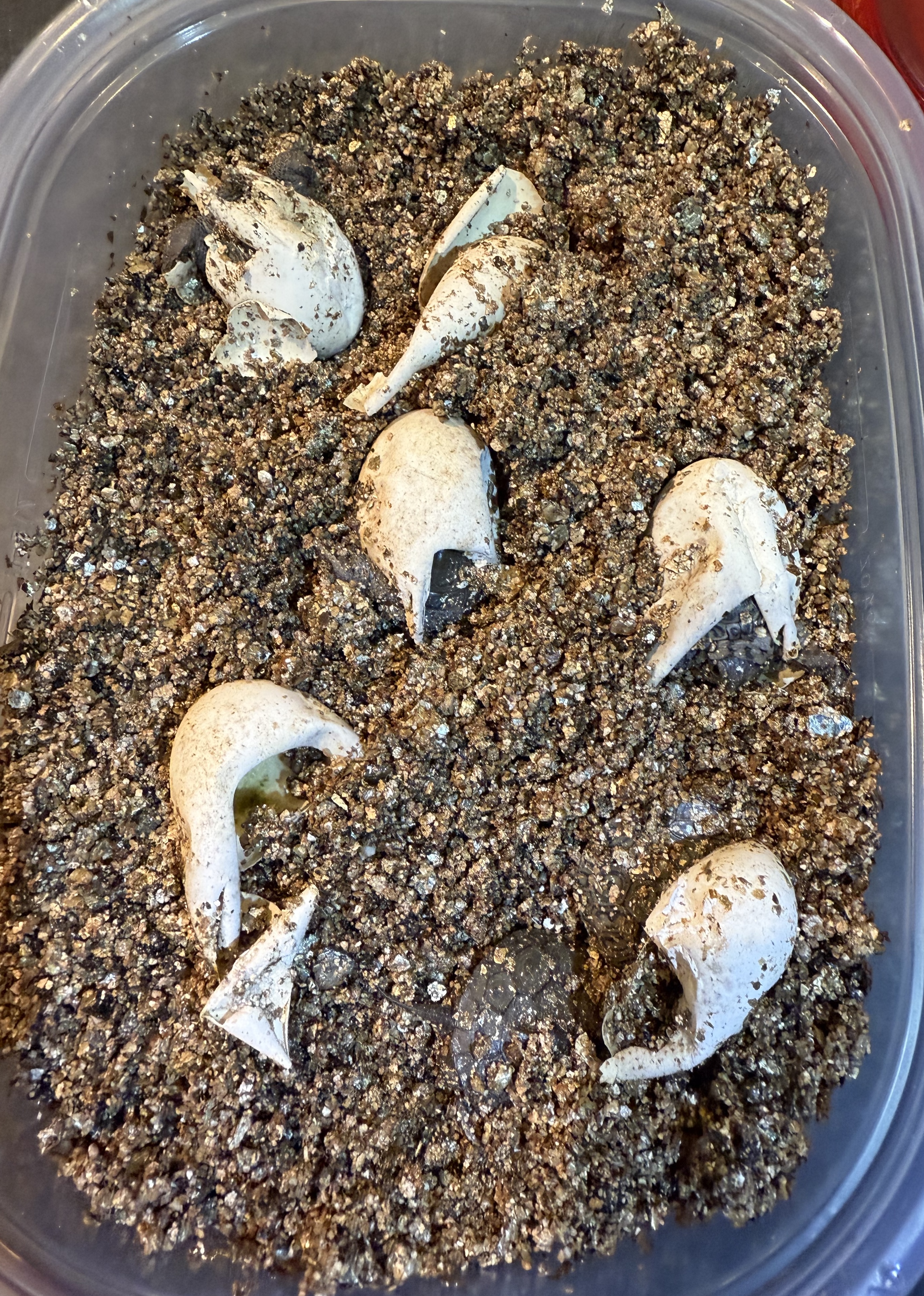
The moment it all began: cracked shells in the incubation tray after six eggs hatched successfully.
Six eggs hatched successfully. The six original hatchlings were named after the construction crew members who made that call: Butch, Alec, Travis, Clint, Shilo, and Jeff. A seventh hatchling, Edward, came to us shortly after, found in the same area as our original clutch. To help our licensed rehabber volunteers tell the animals apart during handling, one volunteer, Reanna, assigned each a visual nickname based on a distinctive shell marking.
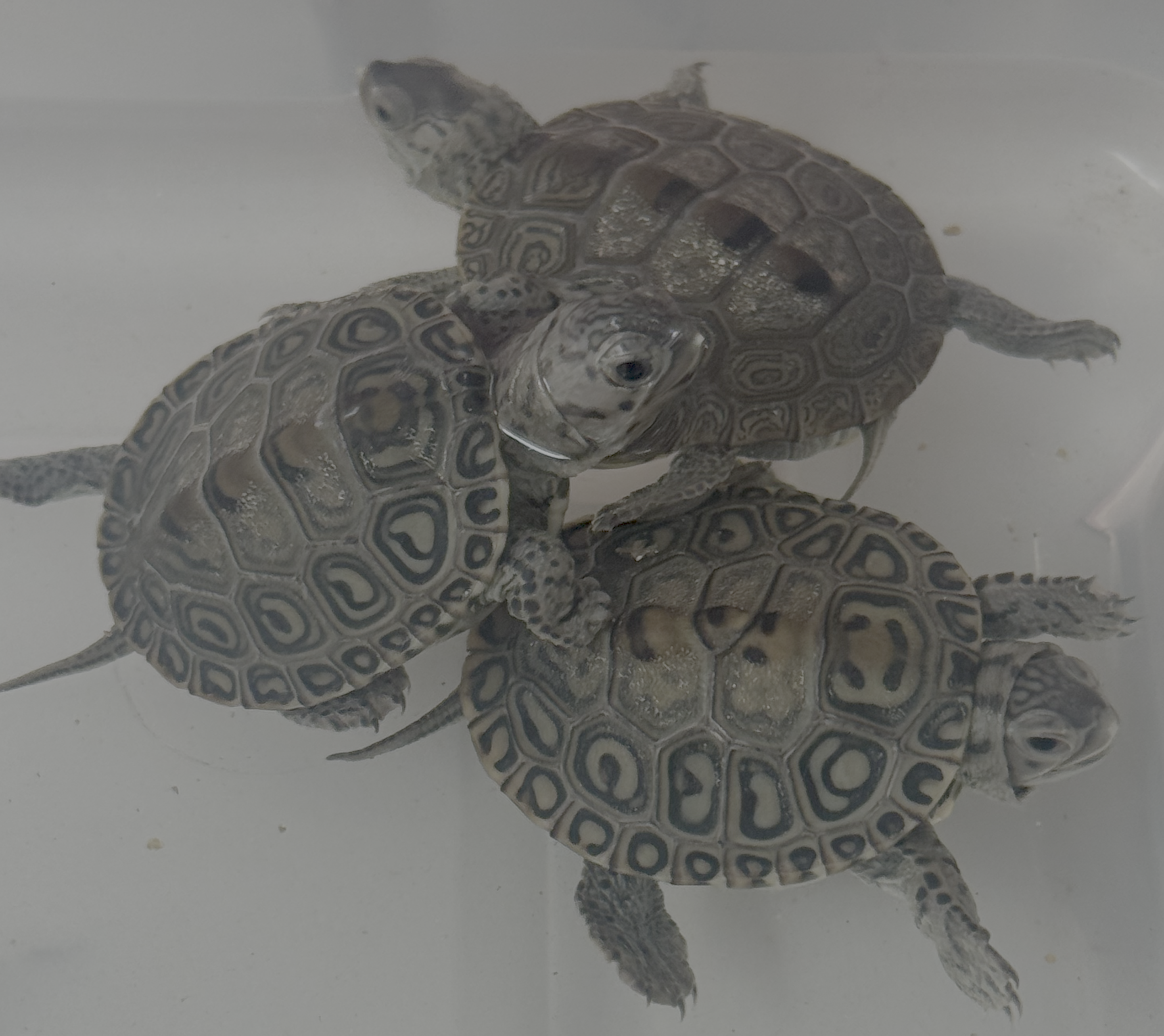
Some of the PHP hatchlings. Each one's distinct shell pattern made the nicknames essential for identification.
The hands-on data work started with Reanna. She was the first to measure the hatchlings, carefully weighing each animal in grams and recording its carapace width and length in millimeters, and she started the handwritten record that became the backbone of this whole project. Working with animals this small takes real patience. It means steadying a squirming hatchling no bigger than a quarter, reading a scale and a set of calipers, and writing every value down by hand, one turtle at a time, session after session. Johnnae took over the measurements and weights for the later sessions, keeping the record consistent as the turtles grew.
By the end there were four sessions, seven animals, and months of careful handwritten notes. That patient, unglamorous work is the part that makes everything else possible. All of it was sitting in a notebook, waiting for someone to find the hours to turn it into something we could actually learn from.
What we did, step by step
We photographed the handwritten data sheets and brought them to the AI assistant, Claude. If you have heard of ChatGPT, Claude is a similar AI assistant made by a company called Anthropic. We want to be clear about how we approached this: every output was reviewed by our team before any action was taken. AI handled the time-consuming, repetitive work. Our volunteers applied the judgment.
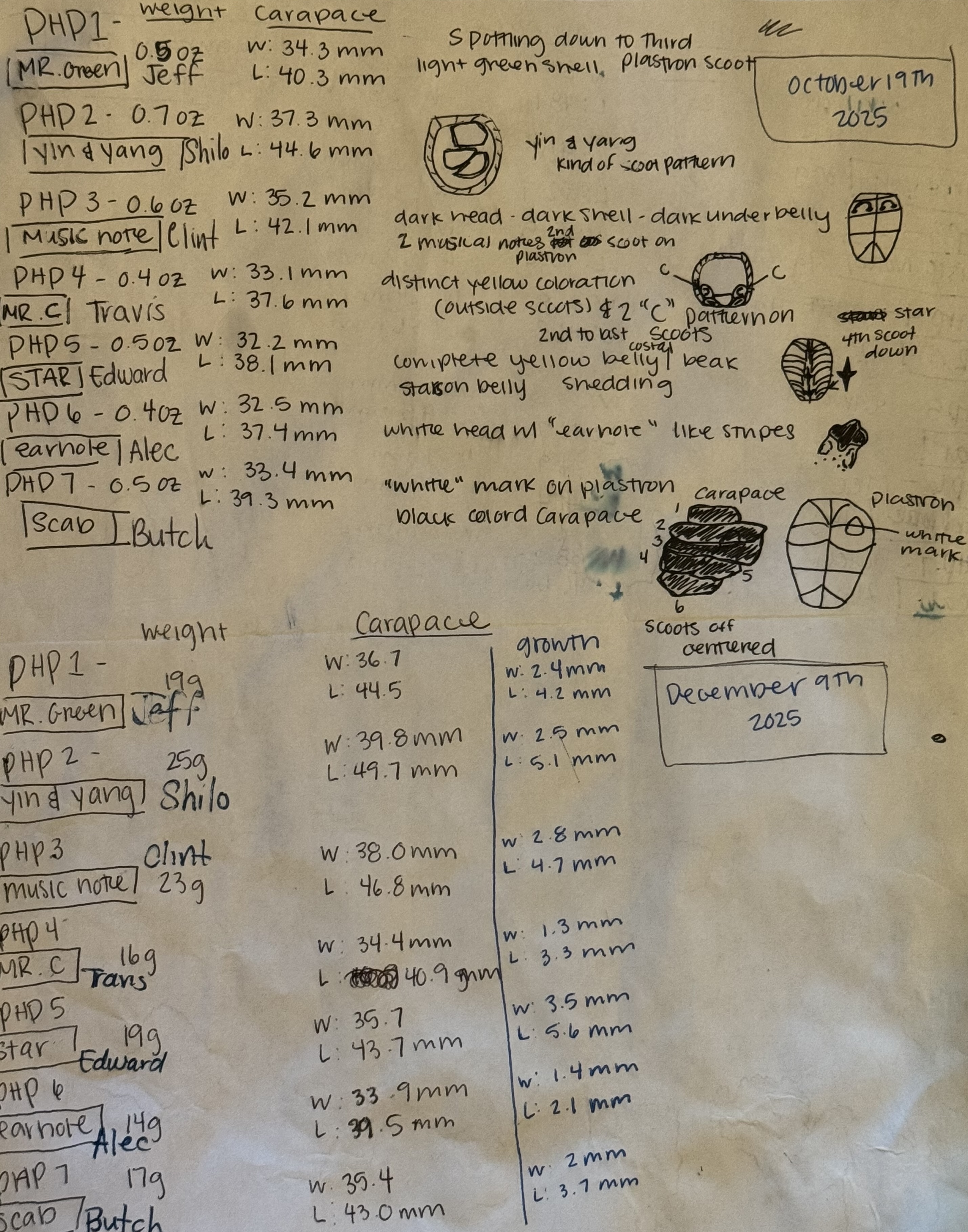
One of four handwritten data sessions, the starting point for our AI-assisted analysis.
- 1Transcription. Claude read all four handwritten sessions from the photos and organized every measurement into a clean, color-coded Excel spreadsheet with one row per animal per session. No manual data entry.
- 2Calculated growth fields. Claude built live Excel formulas that automatically calculate weight and shell size growth between every session, so the spreadsheet stays dynamic as we add future data.
- 3Growth summary. A second tab compared all seven animals side by side across every session, with total and percentage gains for weight, carapace width, and carapace length.
- 4Insights. Claude analyzed the full dataset and produced a written insights tab, identifying which animals were thriving, which needed closer attention, and flagging a growth pattern that had been invisible while the records were on paper.
- 5Error detection. Claude flagged two measurements in the April session that looked biologically implausible, reasoning that values for two animals had likely been swapped. We verified against our original notes, confirmed the error, corrected the values, and updated the analysis.
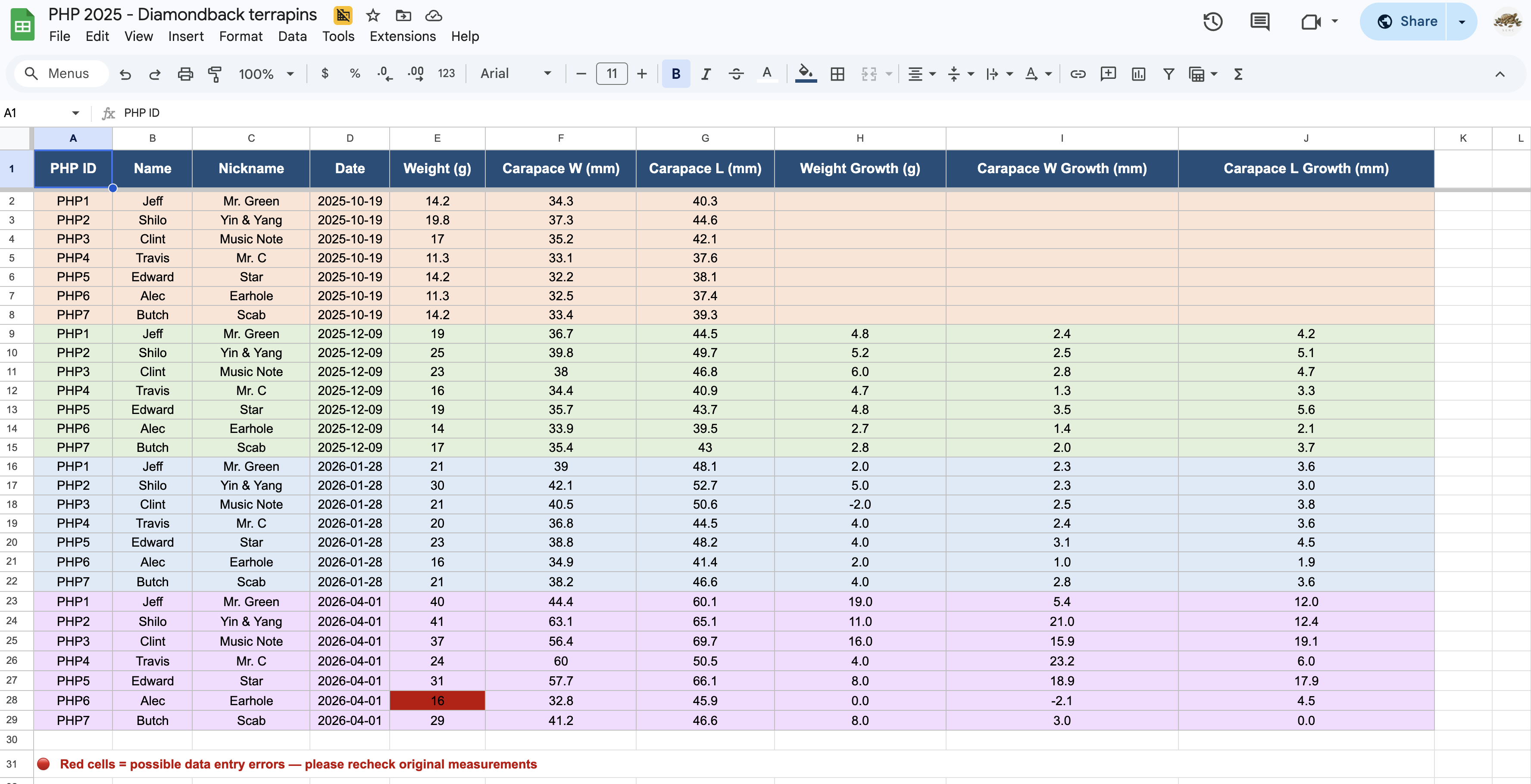
The finished spreadsheet, color-coded by session, with growth calculations built in and data errors flagged for review.
What would have taken hours of manual work was done in a single conversation. Every finding was checked against our source records before anything was changed or acted upon.
The insight that mattered most
Most of the cohort is thriving. Over five and a half months, the majority of our hatchlings more than doubled in weight and grew their shells significantly.
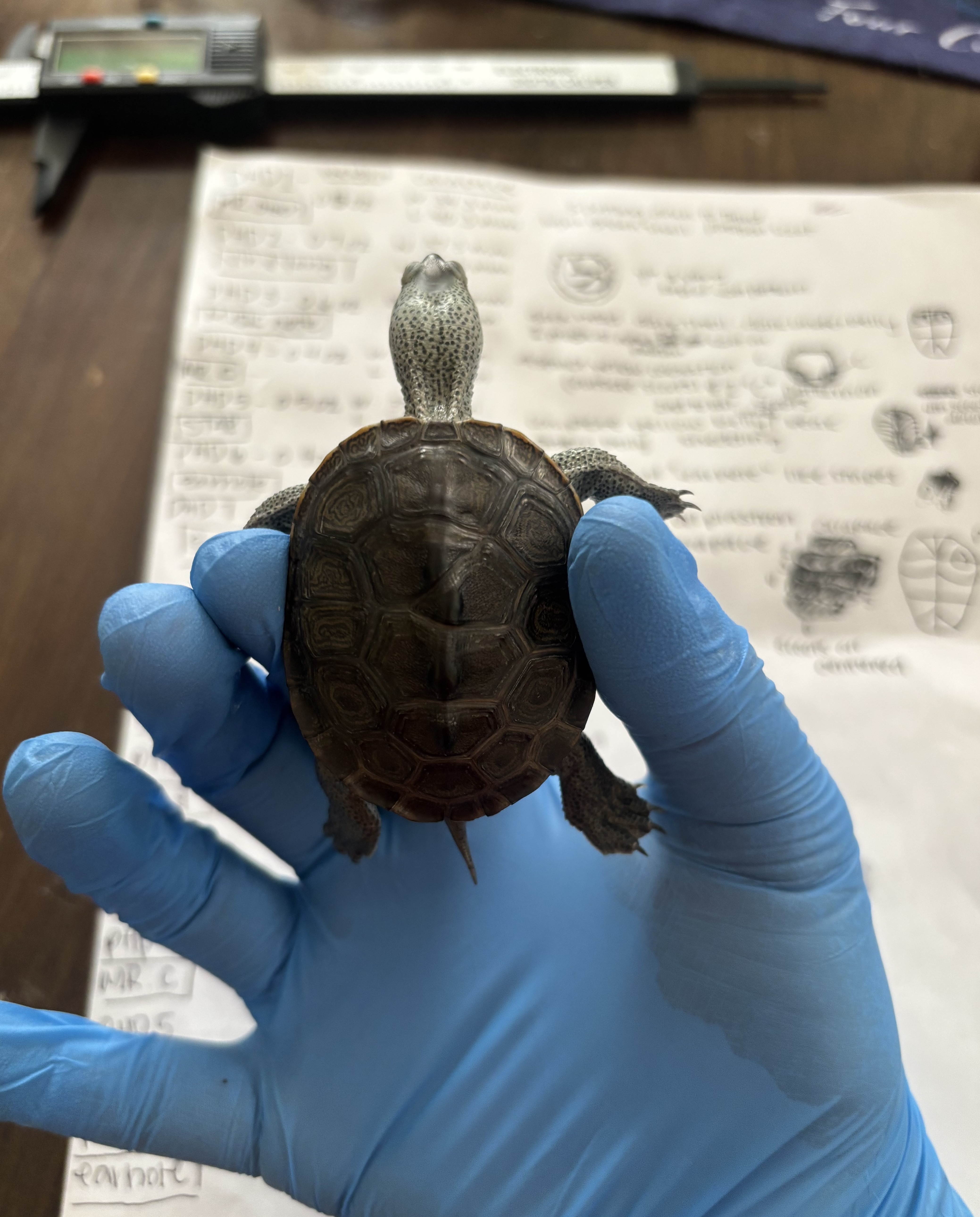
A volunteer handles one of the PHP hatchlings during a measurement session, with the data sheet right at hand.
What responsible AI use looks like in practice
We are not suggesting AI replaces the expertise, the care, or the hands-on judgment that wildlife rehabilitation depends on. What it can do is remove the bottleneck between careful record keeping and the insights those records are meant to produce.
Used responsibly, with human review at every step, AI is a practical tool for small teams doing important work with limited time. The records your volunteers are already keeping deserve to be used. A phone camera and a conversation may be all it takes to make that happen.
If your program's notes are sitting on paper waiting to be useful, we hope this gives you a place to start.*
Update: five terrapins released
On July 30, 2026, five of the seven terrapins we had been tracking were released into protected tidal habitat in coastal Virginia. Before release, each animal was measured one final time, a fifth session added to the same record we started keeping back in October.
We release our head-started terrapins once they reach about 60 mm in carapace length. It is a threshold we set ourselves as a rescue, the size at which we judge a young terrapin big enough to be harder for predators to take and better prepared for life in the wild. Size is only part of the decision, though. We also wait for the weather and environmental conditions to be right before a release, so the timing depends on the environment as much as on the animals. Five of the group cleared our mark, including Edward and Shilo, who had been the standout growers all along. Watching them go was the payoff for months of patient record keeping.
The other two, Travis and Alec, came up just short of our release length and are staying with us to overwinter for release next season. This is where the data earned its keep. Alec was the animal the processed records had flagged months earlier for slow growth, and that same tracking is what told us he was not quite ready. The insights did not just make an interesting story. They shaped a real decision about which animals go and which stay, in the animals' own interest.