
How to run a tech savvy wildlife nonprofit on almost no budget
The software we use would cost more per year at retail than our entire annual budget. We pay almost none of it, because a lot of companies give this away to nonprofits. Being tech savvy is not about money or engineers. It is mostly about knowing what is available.
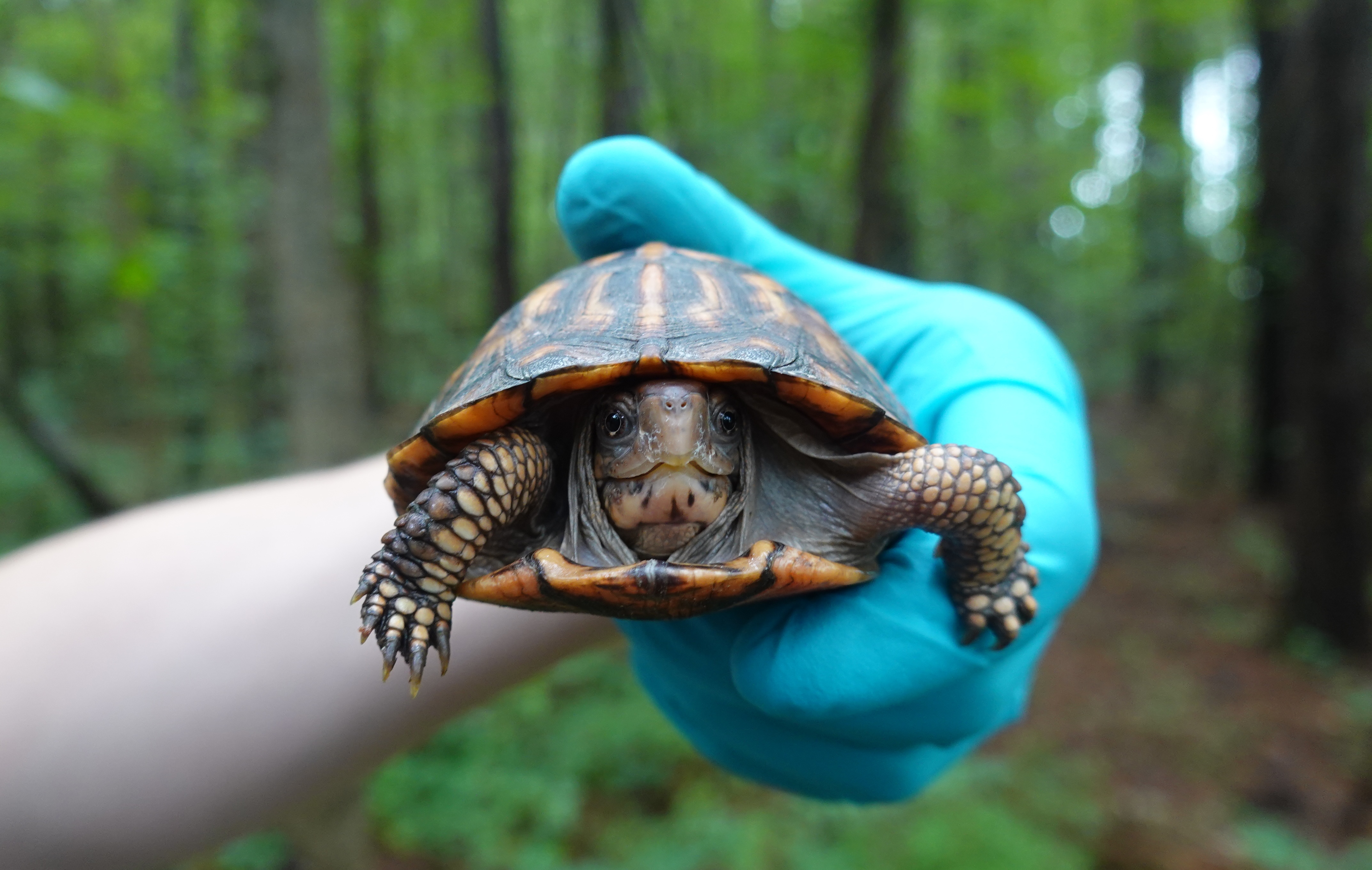
SERC rehabilitates native reptiles and amphibians, like this juvenile box turtle. The right tools free up more time for the animals.
I work in technology for a living, and I founded Southeastern Reptile Conservation, a Virginia nonprofit that rehabilitates native reptiles and amphibians. The tech background is a large part of why an organization our size runs the software and tools it does, and knowing what to search for is the most transferable thing I have to offer other organizations. Here is a comprehensive list, shortest path first.
Verified July 2026. Programs change. Confirm before you budget around anything.
The short version
| Do this first | What you get |
|---|---|
| 1. Get your nonprofit status verified | One check unlocks most of the list |
| 2. Google for Nonprofits | Free email on your domain, Drive, $10k/mo ad credit |
| 3. Fix your payment processing | Stop losing 3 to 5 percent of every donation |
| 4. Canva Nonprofits | Free Canva Pro, 50 seats |
| 5. QuickBooks via TechSoup | $80/year instead of $115/month |
| 6. A website on Wix | Free tier covers most orgs, or 70 percent off premium |
Everything after that is optional. These six take an afternoon.
Do these first
1. Get your nonprofit status verified, and get a domain
Three services gate almost everything:
- Goodstack verifies for Google, Anthropic, OpenAI, Canva, Asana, Twilio, and more. One application, many unlocks.
- TechSoup brokers donated software. This is how you get Microsoft, Intuit, and Wix. Small admin fee per request, so order in batches.
- Direct vendor review for the rest.
Have ready: your IRS determination letter as a PDF, your EIN, and a website stating your mission and nondiscrimination policy. And get a domain, because several programs reject applications from gmail addresses and reviewers treat it as a signal you are not a real organization. Finders, vets, state agencies, and funders all read it the same way. If you do one thing from this post, do this one.
Who does not qualify: government agencies, political organizations, schools. Organizations under a fiscal sponsor generally cannot qualify alone, because they do not hold their own determination letter.
2. Google for Nonprofits
Google for Nonprofits gives you free Workspace for up to 2,000 users: custom domain email, Drive, Docs, Meet, plus the Gemini app and NotebookLM. Paid upgrades run about 75 percent off, with Business Standard around $3 per user per month against $18 retail. Enrolling also unlocks the YouTube Nonprofit Program and Google Ad Grants.
On Ad Grants: $10,000 a month in search ads is real, but accounts get suspended for falling below a 5 percent click-through rate or skipping conversion tracking. If no one will spend two hours a month on it, take the Workspace grant and skip the ads. Approval for Google for Nonprofits does not activate Ad Grants. That is a second application.
3. Fix your payment processing
| Option | Nonprofit rate |
|---|---|
| PayPal | 1.99% + $0.49 for confirmed 501(c)(3), vs 2.89% standard |
| Stripe | 2.2% + $0.30 for verified nonprofits |
| Zeffy | $0, tip-funded. Zeffy is both the form and the processor |
| Square | 2.6% + $0.10 in person, no nonprofit discount |
On $50,000 a year, the gap between a standard rate and a charity rate is several hundred dollars, and against a stacked platform charging 5 percent or more it is thousands. Do not chase the lowest number without asking what you lose, though. Some low-fee options limit recurring giving, receipting, or payout speed, and a processor at 2 percent that actually gets used beats a free one your volunteers avoid.
4. Canva Nonprofits
Free Canva Pro for one team of up to 50 users, extra seats half off, and it now includes Affinity tools. This is the best value on the list per unit of effort and it needs no technical skill at all. The team part matters as much as the free part: build a brand kit with your logo, colors, and fonts, lock a few templates, and volunteers can make posts that look like they came from your organization without anyone reformatting them after.
5. QuickBooks through TechSoup
Intuit has no direct nonprofit discount. TechSoup does. QuickBooks Online Plus with 5 users is an $80 annual admin fee against $115 a month list, and Advanced with 25 users is $170 a year. You need 501(c)(3) status and a budget under $10 million, one Intuit product per fiscal year, reverified annually, and payroll is not included.
Class and location tracking is the feature that matters, because it keeps restricted grant funds separate from operating money. You will need that the first time a funder asks how their $1,200 got spent. If your books are simpler than that, Wave has a genuinely free tier that will not do fund accounting but beats a spreadsheet.
6. A website
Wix's free tier covers what most small nonprofits actually need: a few pages saying who you are, what to do if someone finds an animal, and how to donate. Free indefinitely, no card required, buildable in an afternoon.
Two things to know. Free sites sit on a Wix subdomain like yourorg.wixsite.com and display Wix ads, and you cannot add Google Analytics. Neither is fatal for a brochure site. Your website address is separate from your email address, so you can still run contact@yourorg.org through Google Workspace while the site lives at a Wix URL.
When you outgrow it, TechSoup has 70 percent off a two-year Wix premium subscription, usually with a free first-year domain, which gets you your own URL, no ads, and analytics. Do that before applying for Ad Grants, since Ad Grants requires conversion tracking. Whatever you end up building, put your EIN, mission, and nondiscrimination statement on it, because verification reviewers look for exactly those.
AI tools
Start with what you already have. The free Google Workspace grant includes the Gemini app and NotebookLM at no extra cost. NotebookLM is the underused one: load in your state regulations, permit conditions, and care protocols, then ask questions against those documents instead of hunting through PDFs at eleven at night. For a lot of organizations that is enough, and you already applied for it in step 2.
If you need more, both major vendors run nonprofit programs:
- Claude for Nonprofits: up to 75 percent off Team and Enterprise, roughly $8 per user per month. Verified via Goodstack. Connectors for Blackbaud, Candid, and Benevity, plus a free AI course built with GivingTuesday.
- OpenAI for Nonprofits: ChatGPT Business at $8 per user per month billed annually against $20 retail.
Both are useful for grant narratives, thank-you letters, translating vet notes into plain language, volunteer training material, and board documentation.
One thing no pricing page leads with: business tiers do not train on your data by default and consumer tiers do. Donor lists and volunteer information belong in a business tier or nowhere, and that alone is worth the discount.
Business productivity
Microsoft, if you are already a customer: as of July 1, 2025, the free grant of 10 Business Premium licenses and the Office 365 E1 grant are gone, expiring at each organization's first renewal after that date. Business Basic is still free for up to 300 licenses but is web and mobile only. Standard runs about $3 per user per month and Premium about $5.50. No one sends a reminder, so check your renewal date.
Beyond that, the usual suspects all run nonprofit programs in the 25 to 85 percent range: Slack (free Pro upgrade for small workspaces, or 85 percent off Business+), Zoom, monday.com, Asana, Airtable, Notion, Buffer, Hootsuite, Basecamp. The habit worth building is simple. Before entering a credit card anywhere, search the product name plus "nonprofit."
If you outgrow spreadsheets, Salesforce's Power of Us program donates 10 Enterprise licenses. It is far more than donor tracking. It is a full CRM and platform that can hold donors, volunteers, and program cases in one place, automate email and campaigns, track grants and outcomes, and give you live dashboards and reporting instead of month-end spreadsheet wrangling. The licenses are free, but you will need a volunteer Salesforce administrator to set the organization up and keep it running, so this only makes sense if you have that person.
Fundraising and wish lists
Wish lists are the most underused tool on this list. People who will not give cash will absolutely buy you a $14 bag of supplies.
- Amazon Wish Lists. The default. Easiest to share, widest selection, best for anything non-pet-specific.
- Chewy. Any 501(c)(3) shelter or rescue can create a Wish List, and supporters ship straight to your door. Set it up by contacting Chewy's rescue team. Their Shelters and Rescues Network adds referral commissions when new customers order through your link.
- Walmart Registry for Good. Same concept, different supporter base, and often cheaper on bulk basics.
Run more than one, because it costs nothing and different donors shop different places. Two things help either way. Keep lists short and specific, since a list of 90 items reads as a shrug, and put the boring consumables at the top. People want to buy the fun enrichment item, but what you actually run out of is paper towels.
Merch, printing, and shipping
- Bonfire. Print-on-demand apparel built for fundraising. No inventory, no upfront cost, no platform fee. Verified nonprofits see the processing fee on added donations drop from 8 percent to 3.5 percent, and unlock peer-to-peer campaigns and exportable supporter lists. That export is the real value, because a shirt campaign is donor acquisition that happens to break even. Keep designs to one to three colors, single sided.
- Sticker Mule. No published nonprofit program, but they will usually offer a discount or a credit if you ask, so contact them before you order. Their rotating Deals page is worth watching either way. Stickers cost almost nothing, slip into thank-you envelopes, and get seen for years on water bottles and truck windows.
- 4imprint's one by one program. In-kind grants of $500 in promotional products to 501(c)(3) organizations. Apply about two months ahead.
- FedEx. The FedEx Advantage program discounts through participating association membership, commonly around 50 percent off select expedited shipping, up to 30 percent on standard, and up to 20 percent on FedEx Office. You can also submit a tax exemption certificate to your account so you stop paying sales tax on shipping and printing.
The FedEx Office printing discount is the piece rehabbers should notice. Intake forms, cage cards, laminated care sheets for finders, event banners. Most of us print far more than we ship.
For wildlife rehabs and wildlife hospitals
WRMD (Wildlife Rehabilitation MD) is a free medical database built for wildlife rehabilitators by wildlife rehabilitators, and it scales from a home-based caregiver to a full hospital. Standard is free and Pro is $250 a year. Annual state reporting drops from a weekend of paper to a few minutes, and you can actually find out what worked on a similar case four years ago. Alternatives include WILD-ONe, RaptorMed, and RAVEN, and some state agencies run their own databases that stay current with that state's regulations automatically.
Henry's Pets offers a permanent rehabber discount, 10 percent off their food items and 5 percent off rehab supplies including Fox Valley and Wombaroo formulas. It is open to licensed rehabilitators, subpermittees, and authorized purchasers for rescues and sanctuaries, and you set it up through their rehabber discount form. They also host registries, so supporters can buy off your list directly.
That points at something broader. Most exotic and specialty pet suppliers will work with rescues if you ask, and almost none of them advertise it. Ask about a rehabber or rescue discount, wholesale or B2B pricing, and an affiliate program that pays a commission when your supporters buy through your link. The worst outcome is a no, and you would be surprised how often it is a yes.
If you have someone technical
Short list, because these need capacity more than they need explaining.
- GitHub for Nonprofits. Free Team plan, unlimited private repos and users, or 25 percent off Enterprise Cloud. Publishing what you build is how small organizations get noticed by the conservation tech community.
- Twilio.org Impact Access. $100 credit plus ongoing discounts. Enough for thousands of texts. Hotline routing, enclosure alerts, volunteer shift reminders, finder follow-ups.
- AWS Nonprofit Credit Program. Up to $5,000 in promotional credit. Set billing alerts on day one, because credits run out quietly and bills do not.
- Google Cloud. Free tier plus trial credits. No standing annual nonprofit grant, so do not budget on a fixed number.
- API credits. Anthropic runs social impact programs including environmental and scientific research. OpenAI's Researcher Access Program provides credits on a review cycle.
Why companies give this away
Worth understanding, because it tells you how durable an offer is.
- Mostly pipeline. Staff who learn a tool bring it to their next job. A nonprofit running on Canva today is a marketing department running on Canva in five years.
- Partly reporting. Companies publish impact numbers. Your application is a line in someone's report.
- Sometimes real. WRMD exists because rehabbers built it.
These are standing offers, not competitive grants, so there is no limited pool and no one loses if you apply. Programs change with company strategy, as Microsoft's 2025 retirement showed. And utilization is often a condition, since vendors reclaim licenses that sit unused.
Common mistakes
- Applying from a personal email. Get the domain first.
- Paying retail without checking. Search the product name plus "nonprofit" every time.
- Ordering from TechSoup one item at a time. The admin fee is per request.
- Forgetting renewals. Most are annual and many require reverification.
- Collecting tools no one uses. A free license you never open still cost you the application.
- Putting donor or volunteer data in a consumer AI account.
- Letting one volunteer hold every login. Two administrators on everything critical.
One last thing
None of this replaces the work. The animals still need someone at six in the morning, and no software has ever cleaned an enclosure.
But every hour spent fighting a spreadsheet, rebuilding a flyer from scratch, or reconstructing a year of records is an hour not spent on an animal. Small organizations lose a staggering amount of time and money to problems other people already solved. Almost nothing on this list is competitive, either. There is no committee weighing your application against another organization's. It sits there waiting for someone to fill out a form, and most organizations never do, because no one told them it was there.
Found something useful here, or something I missed? Get in touch through our contact page.