Winter in rehab: why some turtles stay with us until spring
Every fall, the same question comes up: when do the turtles go home? For many of our patients, the answer is spring.
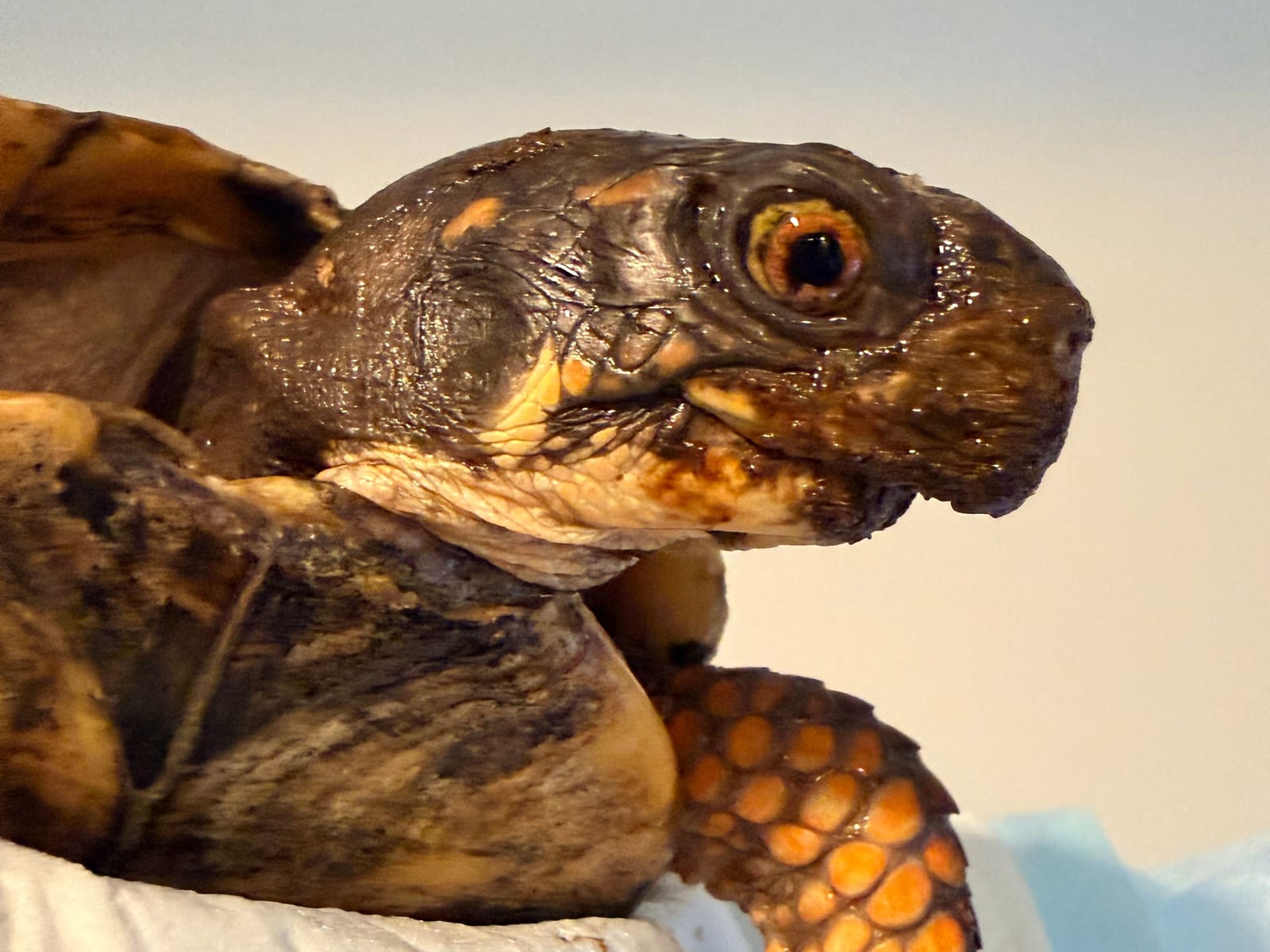
Mira, one of the eastern box turtles spending this winter with us.
Once Virginia nights turn cold, a turtle that is still healing cannot safely go back outside. So our current patients, and the new ones still coming in every week, stay with us through the winter.
What box turtles do in winter
Eastern box turtles (Terrapene carolina carolina) overwinter in shallow burrows called hibernacula. As fall temperatures drop, they dig into loose soil and leaf litter and stay there until spring. This period of dormancy in reptiles is called brumation.
Box turtles do not dig deep. Most settle only a few inches down, where their body temperature hovers just above freezing for the rest of the winter. They stay there until soil temperatures rise in spring, which can mean several months underground.
Shallow burrows mean box turtles can freeze, and remarkably, they can survive it. Adults have tolerated more than half of their body water freezing for up to three days without injury, making them the largest animals known to be naturally freeze tolerant. That tolerance has limits, though. Prolonged freezing does kill turtles in the wild.
Many box turtles also return to the same overwintering areas year after year. Research here in Virginia suggests juveniles may pick poorer sites than adults in their first winters, which leaves them more exposed to the cold.
Why our patients don't brumate
Turtles are ectotherms. Their metabolism, immune response, and healing all depend on environmental temperature.
In reptiles, both immune function and the inflammatory response depend on temperature, and cooler conditions slow healing. For most turtles, 79 to 90°F (26 to 32°C) is considered the right range for recovery.
A brumating box turtle sits just above freezing for months. At that temperature, shell fractures stop knitting, wounds stop closing, and the immune system cannot effectively fight infection. For head-start hatchlings, brumation also pauses growth, which is the main goal of their time in care with us.
We do not let our patients brumate while they are in care. They stay warm, fed, and active through the winter so healing and growth continue.
What winter care looks like
Our turtles spend the winter in indoor areas where the ambient temperature stays between 80 and 82 degrees, with the right humidity for each species. Each setup has UVB lighting, plus basking lights where they are needed.
What a turtle lives in depends on why it is here. Patients recovering from injury or illness may be in a hospital setup on pads or newspaper, which is simpler and easier to keep clean while wounds heal. Eastern box turtle hatchlings and juveniles live on substrate they can dig into. Our head-start hatchlings move up to larger bins as they grow.
All winter, while it's too cold for the turtles to get outdoor time, bulbs burn out, filters need replacing, and substrate gets changed out constantly. Multiply that by every turtle in care, for months, and winter is our most supply-heavy season.
Meet Mira
Mira is an eastern box turtle who came to us back in May. One eye was sealed shut. The other had a large tumor. She was also missing part of her jaw.
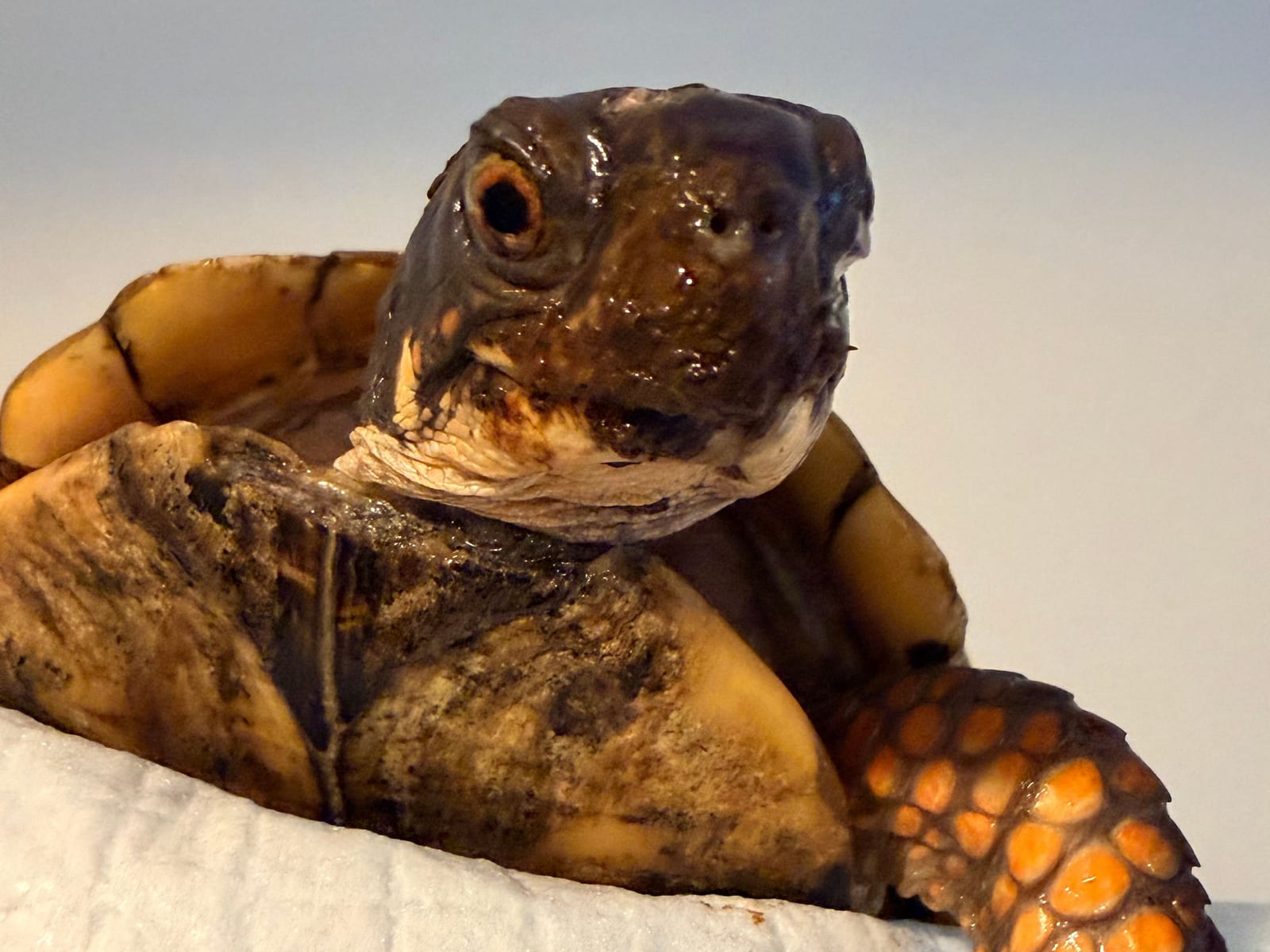
Mira today, with both eyes open.
Today she can see out of both eyes and eats on her own. She has come a long way, but she is not ready to go back out before the cold sets in.
So Mira is wintering with us. Warm, fed, and under UVB, her body can keep doing the work of healing instead of shutting down for months. We are optimistic she will be able to go home in the future. She seems to think so too!
How you can help
Keeping Mira and every other winter patient going takes lighting, water filtration, and substrate, and a lot of it. If you would like to help, our Amazon and Chewy wishlists have exactly what we use. You can find them on our donate page.
Every item goes straight to the turtles. Come spring, we hope to be posting a lot of release videos.